

Soulful Words

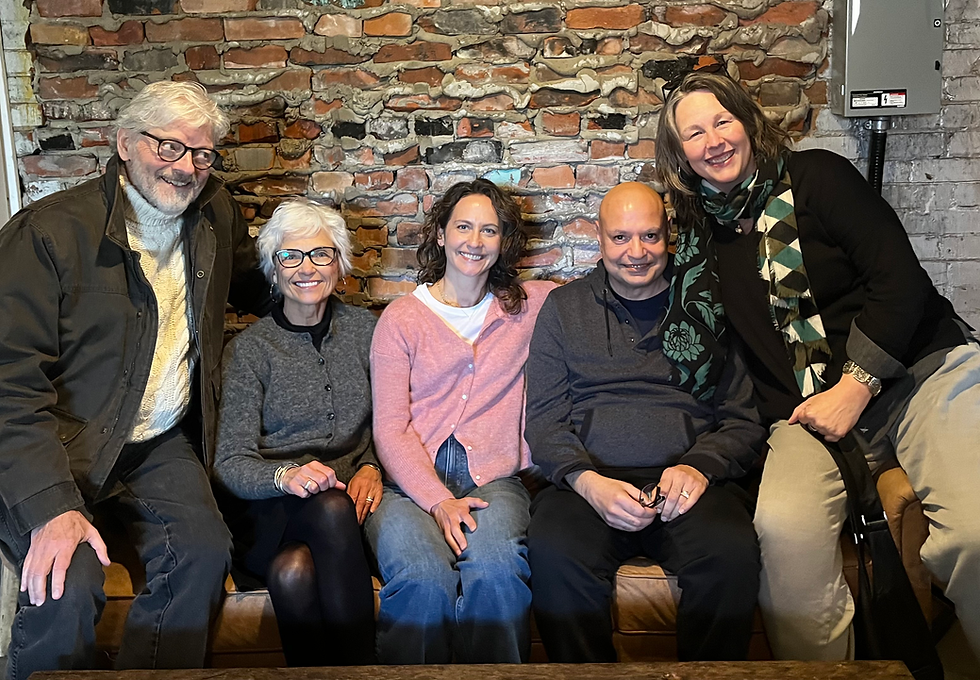
I met up with my writing group last weekend, five good friends who also happen to be five very fine writers. Over coffee, we checked in with one another about our lives and about our writing. I found myself marvelling that each of us is writing about something we care about. We're not writing to be clever, or to ride the wave of a trend. We're writing to touch the depths, hoping that those depths will connect us to the readers who share them. This, in my view, is the basis of soulful writing. It reminded me of a piece I wrote on the subject last year for a literary magazine. They didn't publish it, making me wonder what other writers care about, when they write. But this is what I care about, so I'm happy to share it with you.
***
We all know that clarity is important, saying what we mean to say. So is brevity and being “lean of expression.” “Show, don’t tell” has become anthemic in writing courses. But, more and more, in my writing and in my reading, I want something else. I want depth.
This might be an age thing. I’m seventy-two, the tide is coming in, and I’m not ready. I want, at the very least, to dip my toes in the water. I want to think big thoughts, looking out to the horizon. I want to feel the weight of my own soul pulling me downward into the soft sand before I’m whooshed up and out of my body, if that’s what’s going to happen on the day.
Soulful writing can take us there. Soulful writing assumes the tide. It knows there is a larger realm within which we live out the little dramas of our lives, a bigger picture within which our own is barely the size of a pixel.
It begins when we plant one word after another on an open page. Not, What is it that I want to say? Rather, What is it that wants to be said? That’s a very different kind of question. There’s humility in a question like that, a willingness to be open to something beyond the skittish demands of the ego.
In fact, it’s a question that asks our ego to step aside altogether from its usual role as Mission Control to take up a different one, a subservient role to whatever soul itself would have us say. If Bob Dylan was right, and “we gotta serve somebody,” who would we rather serve?
The genre is irrelevant. Soulful writing applies equally to prose and poetry, fiction and non-fiction. It is an approach, an inner attentiveness, an appeal to the depths, for them to show up. When those depths do show up, definitions of ‘soul’ become moot, like tacking a name to the whirlwind.
We know it when we feel it, when we are in the presence of soul: whether in the poetry of David Whyte, whose words open a portal that goes both ways, inward and out, words that then, themselves, back away, leaving us at the threshold, to gawk and to wonder; or in the gentle novels of Kent Haruf that summon a hushed reverence for the small but noble triumphs of our daily lives.
It’s a kind of homecoming to read things like that. We feel, more than we remember, the life or the lives that brought us here, before we came to think that this life was the only one. Then, there is an even deeper remembrance, of who we are, or who we were meant to be. And this is where any warm reminiscence ends.
If words on the page can awaken such depths within us, they can also disturb our sleep. They can haunt us with the spectre of our Unlived Life, the one we gave up when we chose this one. They can place demands on us, and on the time we have left.
Soulful words are wily in this way. They’re seductive, like sirens. And they don’t care to protect our little self-made boats from the rocks, should it be necessary that we lose them. They pull us in, instead.
But you and I can’t learn how to do this, not even intentionally, as a writing exercise. It’s beyond the craft of writing; it’s the very art of it. I’m not sure it can be taught. To summon the depths, we already need to be living within their proximity and feeling their gravitational pull. It must be familiar territory, like the path that leads to the mouth of the cave, if not all the way to its inner darkness.
Depth begets depth. So, this may be a call for those of us who write to be courageous in our living, not just in our writing; to do whatever work our souls dredge up for us to do; and to allow that work to inspire us as we put words on the page. How else will we know the soulful words when they appear?


Comments